
Hamilton County Parole vs Probation
Probation is a sentence imposed by the Hamilton County court and supervised through the local probation department. It can stand in place of a prison term or follow a short jail term. Parole and mandatory supervised release, often shortened to MSR, concern a person released from the Illinois Department of Corrections. IDOC Parole Division supervises those cases. Most modern Illinois prison releases involve MSR after a determinate sentence, not a traditional discretionary parole vote.
The distinction controls where to verify the record. A Hamilton criminal judgment and later docket entries show whether the court ordered probation, its length, and any modification or revocation. An IDOC individual profile, sentence record, and Parole Division are the stronger sources for state supervision. Hamilton County Probation does not become the parole authority merely because an IDOC supervisee lives in the county.
| Feature | Probation | Parole or MSR |
|---|---|---|
| Source | Hamilton County court sentence | Release from an IDOC sentence |
| Supervisor | Hamilton County Probation | IDOC Parole Division |
| Public starting point | Hamilton case docket and judgment | IDOC individual profile and sentence record |
| End record | Court completion or discharge entry | IDOC supervision discharge or final status |
- Probation
- A court sentence served under local supervision.
- MSR
- Mandatory supervised release after an Illinois prison term.
- Parole
- Conditional community release used chiefly for older indeterminate sentences and limited statutory groups.
- Discharge
- The formal end of the sentence or supervision, not just departure from a facility.
Check Hamilton County Post-Release Status
Start with identity, case, and custody source. A name alone can merge two people. The Hamilton court file explains the sentence, while the correctional record shows whether state custody or supervision followed. A jail release record only proves that one facility ended possession. It may describe a transfer to IDOC rather than community release.
- Search the Hamilton County case through the county-linked Judici court index. Use a case number when known, then compare the charge, dates, and disposition.
- Read the judgment or obtain it from the Circuit Clerk. Look for probation, an IDOC sentence, later modification, or revocation entries.
- For a prison sentence, use the IDOC Individual in Custody Search. Match the IDOC number, birth data, status, and sentence details.
- Contact the proper office. Hamilton County Probation handles its court cases. IDOC Parole Division handles parole and MSR.
- Record the date checked. If a violation or warrant appears, verify the current outcome rather than treating the first listing as final.
The individual IDOC profile is more useful than a broad county search because IDOC does not publish a full county roster of everyone on MSR. The IDOC sex-registrant parole search covers only the narrow subset who both remain under IDOC supervision and have a registration duty. No result there says nothing about ordinary parole or MSR.
For the county release event that came before supervision, the Hamilton County released-inmate search and record path explains how the Hamilton court record fits the White County jail record.
Note: A prison exit date may begin supervision, while a final discharge date marks the end of state authority.
Hamilton County Supervision Offices
The local and state contacts serve distinct roles. Hamilton County Probation can address a Hamilton court probation case. It cannot confirm an IDOC parole case solely because the person returned to McLeansboro. IDOC Parolee Assistance is the statewide public route for state community supervision questions. Personal report schedules and private case plans are not ordinary public lookup fields.
Hamilton County Probation
102 S. Jackson Street
McLeansboro, IL 62859
618-643-4215
Monday through Friday, 8:00 a.m. to 4:00 p.m.
IDOC Parole Division
Illinois Department of Corrections Parole
Parolee Assistance: 800-666-6744
The courthouse setting can make these functions look like one system. They are not. The Sheriff, Circuit Clerk, and Probation Department perform separate jobs, even when their offices are close. The clerk preserves the judicial record. Probation supervises the court order. The Sheriff may hold arrest or transport records but Hamilton County operates no jail.
Hamilton County Supervision Conditions
Conditions depend on the judgment, release order, and supervising authority. Common subjects can include reporting, approved residence, travel limits, treatment, and compliance with the law, but the exact terms must come from the person's signed order. Public profile pages generally do not reveal check-in times or a full case plan. The person or counsel should obtain those details from the assigned agent.
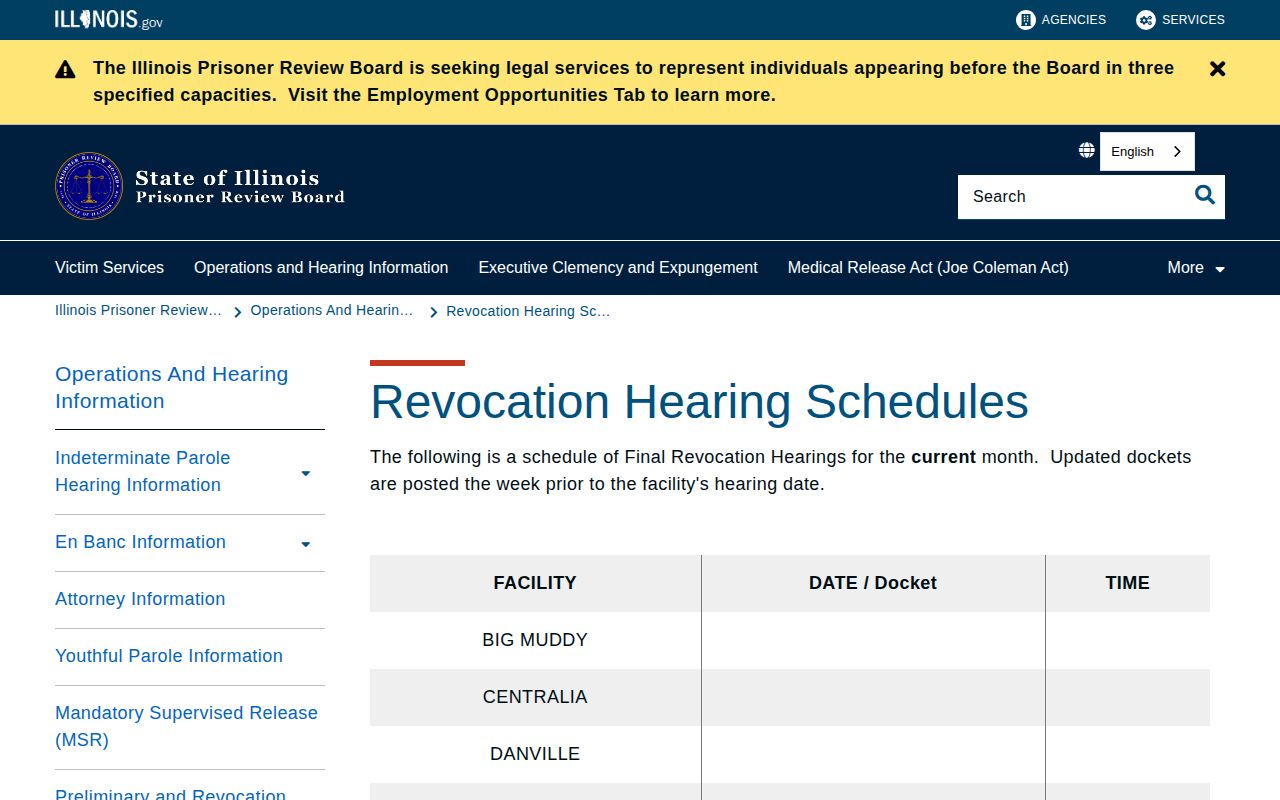
The Illinois Prisoner Review Board establishes MSR conditions and conducts relevant revocation proceedings. An alleged breach does not equal a final revocation. The Board posts current-month final-revocation schedules and says updated dockets appear during the week before a facility hearing. Its results page supplies the later action. Read that action as written, then check IDOC for current custody.
A court probation issue follows a different route. Hamilton docket entries may show a petition, hearing, modification, or revocation. A pending allegation can leave the supervision question unresolved. The signed order controls.
Hamilton County Absconder Checks
IDOC maintains a Wanted Fugitives page for people whose fugitive warrants were requested by the Department. It is a focused state supervision tool. It is not a Hamilton County warrant list, and it should never be read as a full list of everyone with a local warrant. A listing means a prior release did not remove the risk of renewed custody. It does not prove the person has since been arrested.
Check a possible IDOC absconder against the individual profile and the current agency record. For a local probation warrant, use the Hamilton case docket and confirm with the issuing authority. If the issue reached the Prisoner Review Board, compare the hearing schedule with published results. Dates matter because a warrant page, court docket, and custody database may update at different times.
The Illinois Prisoner Review Board schedule is the official route for current revocation hearing dates.
Hamilton County Parole Decisions
The Illinois Prisoner Review Board mainly handles traditional parole consideration for old-law indeterminate sentences and other groups made eligible by statute. Most people sentenced under the modern determinate system are not waiting for a routine parole vote. They serve the term less lawful credit and then enter MSR. Section 730 ILCS 5/3-3-3 is the eligibility starting point, but offense date, sentence type, and other statutes can change the route.
The Board publishes a yearly en banc calendar and monthly parole interview lists. Approved open minutes provide actions after the next month's approval process. A grant, denial, continuance, or set of conditions is a board action, not necessarily the time someone walked out. Release processing and another hold can still affect the actual event. Verify the effective action with IDOC and VINE.
The yearly en banc calendar and monthly interview lists serve different stages. Approved minutes appear only after the later approval step. Current revocation schedules can roll over, so record the month and year before checking the result page.
A favorable parole action still needs an effective date and release processing. The approved open minutes can establish what the Board decided, but the later IDOC profile and VINE event show whether the custody change took effect. When supervision eventually ends, an IDOC discharge status is stronger evidence than a past release date. A person can leave prison and remain on MSR for a further period, so release and discharge must be checked as two distinct events.
The yearly en banc schedule, monthly interview dockets, approved minutes, revocation schedules, and revocation results each answer a narrow question. The yearly calendar tells when the Board meets. An interview docket shows a case is set for review. Approved minutes record the later Board action. A revocation schedule shows an allegation has reached a hearing stage, while the results page reports the disposition. None of those documents alone proves the date a person left or returned to custody. Match the Board document to IDOC status and the source-reported VINE event.
Revocation documents answer a different question. They address alleged violations after release and may revoke, restore, release, continue, or otherwise resolve the matter. Use the result's exact terms. Do not turn a scheduled hearing into a finding.
Note: Parole eligibility lets the Board consider a case; it does not promise a favorable vote or an immediate release.
Hamilton County Supervision Discharge
Leaving White County Jail or an IDOC institution is not the same as finishing supervision. A person may exit jail onto probation, leave prison onto MSR, or move from one authority to another. Final verification therefore asks two questions: did custody end, and did legal supervision end? The answers may appear in different records.
For probation, look for completion, termination, revocation, or discharge in the Hamilton judgment and later orders. For parole or MSR, use the IDOC profile and authorized Parole Division confirmation. A registry entry is not a substitute. Registration duties can have a separate basis and duration from correctional supervision.
Keep the release record, court order, and supervision status distinct. The jail record gives the physical event. The court or IDOC supplies the legal basis. The ending record shows when the supervision authority closed. That three-part check avoids treating a past release as proof of present status.
Public Record Search
Sponsored Results